Showing posts with label politics. Show all posts

Sunday, 8 May 2011

An essay on language.

I wrote this essay for my theory module at the university of plymouth.


To what extent does language play a role in contemporary international relations?


The essay has a linear argument tracing language as a body of knowledge onto the power/knowledge relationship; this is brought into play and made important via language’s relationship to reality. The argument of language’s relationship to reality merits a discussion of ideology, hegemony and struggle, which are closely interlinked. This is all for the effect of showing the role language plays in international relations. Language is the very framework for our understanding and in this essay it is understood in its most basic components as a semiotic system, or a system of signification with an ever present emphasis on social practise. Contemporary international relations is assumed to be the outcome of an amalgamation of individual actors, their beliefs and values, institutions, regimes and differing social structures. Additionally, international relations can only be understood, interpreted and represented through language, in this way, language plays a chief role in international relations and the elucidation of its mechanisms is key.


When considering language as knowledge we understand this to be the shared ideas or norms of an actor, therefore knowledge relates to the broader linguistic structure within which it is embedded. Constructivism assumes actors are social, that ‘identities and interests… are constructed by these shared ideas’ (Wendt 1999:1). Thus, Wendt assumes language as the bedrock of identity. Importantly it can ‘frame international situations’ (Wendt 1999:141), acting as a perspective and is ‘any belief an actor takes to be true’ (Wendt 1999:140). In international relations, every actor’s identity is constituted within a linguistic structure shaped on the knowledge that they take to be true. What cannot be emphasised enough is that the knowledge of actors, their values and beliefs are assumed to be real, and so they act on them with conviction. This can explain the willingness of International Monetary Fund (IMF) economists to make policy prescriptions through their ‘“one size fits all” approach’, because they believed in their methods (Stiglitz 2002:34-35).


For Foucault there is an issue with this neutral status of knowledge, ‘power and knowledge directly imply one another’ (Foucault 1979:27), concerning actors, ‘it is transmitted by them and through them; it exerts pressure upon them’ (Foucault 1979:27).


Mcnay (1994:99) clarifies this articulation of biopower, the power/knowledge relationship as it is channelled through bodies ‘is fundamentally normalizing and regulatory’. For instance, the United Kingdom is both a subject and advocate of human rights regimes, for one of many examples of this see the European Human Rights convention (European Court of Human Rights 2010). Another example resides in the insight of Stiglitz (2002:34) and the discourses mobilizing the IMF’s ‘lack of detailed knowledge’ in making policy, mentioned in the previous paragraph. The relevance of believing these discursive regimes was recognised by Foucault, saying, ‘even the word of the law could no longer be authorised…except by a discourse of truth’ (trans. of Foucault 1979, by R. Young 1981:55 cited in Mcnay 1994:86). The belief in a discourse and its normality is an important dimension to knowledge, both legitimating and maintaining the power in knowledge mobilization and the social regulation of subjects in the wider context of international relations. This would suggest no ‘distribution of knowledge’ or ‘identity’ is neutral but is the product and the producer of ideational power relations. The importance of this power/knowledge relationship in conjunction with its normalizing and regulatory function becomes apparent when we consider the restriction of ontology on epistemology.


When actors talk, they wish their language reflects actual material reality (The Real). This seems an almost commonsensical notion, we want to describe what we see and what we feel, etcetera. We can only do this, however, through systems of signification and are ultimately torn from the Real by our inability to experience it before signification. There is a drive, Lacanian Desire, in that systems of signification are repeated ‘attempts to colonize and domesticate the real with reality, to represent the real in discourse’ (Glynos & Stavrakakis 2004:205). If the real is an objective state that we attempt to conceive of subjectively, through language, then all reality construction involves reifying categories for the purpose of truth, to somehow make it fit. However, truth and language are entangled by ontology and it is the structure of the discursive system that limits what we communicate, think and know. As Glynos puts it, there is an ‘epistemological barrier’ but ‘this barrier is ontologically constitutive’ (Glynos & Stavrakakis 2004:204). As an example of this we could understand the conflict between the West and Islamic fundamentalists as a conflict of ontology/reality. After all, freedom is closely associated, if not synonymous, with democracy and markets (for a view that propounds this explicitly, see, Fukuyama 1992), but for Sayyid Qutb democratic freedom is a ‘servitude of servants’ (Bergesen 2008:23). Ontology has the ‘potential for an infinite production of meaning’ (Mcnay 1994:86), allowing it to constitute new knowledge and practice. The validity of knowledge would be exclusive to reality rather than to the Real, it can only be verified with reference to many other signifiers. So, with the Real and reality as ‘axiomatically unbridgeable’ states (Glynos & Stavrakakis 2004:205) reality construction becomes an a priori power relation. Thus, it makes sense to omit a line from Barthes that reads ‘in the present state of history…’, and instead only acknowledge that: ‘all political writing can only confirm a police-universe, just as all intellectual writing can only produce para-literature which does not dare…tell its name’ (Barthes quoted in Marcuse 1964:84). This lays the foundations for considering language as the site of hegemony, ideology and struggle.


Hegemony, for this essay, is the state of fixed meaning in its totality, an ontological consensus, or ‘an exhaustive representation’ (Glynos & Stavrakakis 2004:204) but as has been discussed, we cannot know the Real, only attempt to make sense of it through signification. It is because ‘discourse is in a constant state of tension’ (Glnos & Stavrakakis 2004:204) by virtue of its impossibility ‘to reach an exhaustive representation of the world’ (Glynos & Stavrakakis 2004:204) that the concept of hegemony is more a theoretical potential, or ontological mistake, there is not and never will be total consensus. If this is true, ideology should be the analytical level where the centrifugal state of hegemony is played out. Ideology is a system of ideas with some semblance of semiotic closure, thus we can attribute the concept of knowledge an ideological flavour. It has the effect of ‘fixing the… process of signification’ (Eagleton 1991:196), but still, with recourse to the ‘unbridgeable’ Real (Glynos & Stavrakakis 2004:205), ‘ideology is always a field of struggle’ (Zizek 2009:37). Examples of this have already been given: IMF policy, European human rights and democratic freedom; these are all ideological constructions, none have total consensus. Our drive to ‘colonize and domesticate the real with reality’ (Glynos & Stavrakakis 2004:205), becomes the practice of ‘hegemonization’: an attempt to ‘fix the meaning of social relations’ (Critchely 2004:113) through language. The drive towards semiotic ‘closure’ (Eagleton 1991:196), is therefore inscribed into the logics of language. An interesting parallel exists with Marcuse’s operationalization: ‘to make the concept synonymous with the…operations’ (1964:86) for the effect that ‘thought is stopped at barriers which appear as the limits of Reason itself’ (1964:14). Thus ideology as a state of fixed meaning has the effect of abridging other meanings and ways of thinking. (One should self-consciously refer back to the divergence of ontology between Qutb and Fukuyama.) Humorously, UK national security strategy highlights ‘ideology as a driver of instability’ best tackled by a commitment to promote ‘justice, tolerance and the rule of law’ (Cabinet Office 2009:13) while they, the UK government are an open champion of the ‘liberal, market-oriented vision of a free society’ (Cabinet Office 2009:8). Indeed, the ‘denial of ideology only provides the ultimate proof that we are more than ever embedded in ideology’ and that as ‘ideology is blind’ (Zizek 2009:37) -ontologically, of any other reality- so too is knowledge blind. This has strong implications for language, and international relations, if is to be meaningful, language must have some semiotic closure, thus reality (the linguistic construction of the real) is an ideological construction. The closure in this essay therefore implicates the role of language as necessarily ideological, exclusionary, regulative and thought-abridging. In international relations, the question becomes magnified. It is not, where is ideology, or, what is ideology, but, which ideology? What is excluded; what regimes are upon our bodies; what thoughts are omitted?


In conclusion and tracing the argument, the system of language aptly accounts for our cultural proclivities, providing a foundation for our knowledge, which in turn provides an identity that is acted upon. Belief in this knowledge is an important dimension, and through the power/knowledge relationship we see how language has a regulative function on the body, but also, that identity and knowledge are not neutral. This point is reinforced when we consider how language cannot reflect the Real, but must constitute itself a reality through which it perceives the Real. This brings us to the relevance of ontology on our knowledge claims, and we see, due to the separation of the Real from reality, ontology defines the extent and validity of what we can know. With these points in mind, language and representation in international relations must construct itself with some closure to be communicative; the effect is that reality construction is ideological and so necessarily regulative, exclusionary and thought-abridging.


Word Count: 1555


The references will follow.


However let me take a moment to continue. This essay is essentially asking us to forgive our constant fear of 'ideology' and accept that ideology is the very basis for reality construction - to be, is to be: ideological. We cannot stray far from that, this is the very logic of langauge. However, contentions do exist for me.


The essay treats humans as merely textual objects, caught up in a web of signification, willing to signify. Yet this very approach, that ontology defines epistemology, is a false dichotomy - if Derrida taught us anything, it is suspision of binary opposites; who serve to obfuscate thinking. Epistemolgy, our knowledge is certainly largely down to ontology (our symbolic categories - if you will) yet it misses the very state of humans - we are not pure textual beings. We have a rich adaptive history in biology and neurology that suggests more than text. Additionally, look to animals who differetiate between objects in the Lacanian real. How is it that this is done? We are forced to contemplate them having a textual base, or that there is something more. I have no concluding thoughts yet.


When we mix these two ideas, the neccessity of ideology in reality and the potential for a non-textual (perhaps neuro-biological) infuence, then the questions remains whether an ideology can have positive effects on the human condition, something akin to the ideas of Liberal thought, or the Hegelian master/slave dialectic. And what of the laws of thermodynamics, for there is much evidence that even in signification, that things tend towards entropy (chaos/disorder) - does this make us all the hegemon!? Perhaps we shall fixate ourselves with these 'progressive' ideas of 'purpose' and nobility, or we admit that living life 'confirms a police-universe'. Which police-universe, then, should we allow? And how can we answer, considering any attempt to give one will be reliant on our current normative concepts and ideas, it will be constructed from our already active ideas of truth, justice and right and wrong. Thus, we judge our future through thier past, and it is difficult to do otherwise.


References:


Bergesen, A. J. The Sayyid Qutb Reader, selected writings on politics religion and society, 2008, UK, Routledge


Cabinet Office (2009) The National Security Strategy of the United Kingdom: update 2009, Security for the next generation, Available at,


http://www.official-documents.gov.uk/document/cm75/7590/7590.pdf (Accessed: 21/02/2011, 12:00)


Critchley, S. (2004) ‘Is there a normative deficit in the theory of hegemony’, in Critchley, S & Marchart, O. (eds) Laclau: a critical reader, New York, Routledge, pp. 113-123


Eagleton, T. (1991) Ideology: an introduction, Finland, Verso


European Court of Human Rights (2010) Convention for the Protection of Human Rights and Fundamental Freedoms, Available at, http://www.echr.coe.int/NR/rdonlyres/D5CC24A7-DC13-4318-B457-5C9014916D7A/0/ENG_CONV.pdf (Accessed: 29/01/2011 15:00)


Foucault, M. (1975), Surveiller et Punir: Naissance de la Prison, trans by, Alan Sheridan (1977), Discipline and Punish: The Birth of the Prison, UK, Peregrine Books


Foucault, M. (1981) The order of discourse, trans. of ‘L’ordre du discourse’ (1979) by Young, R. in, Mcnay, L. (1994) ‘Foucault: A Critical Introduction’, Cornwall, Polity Press


Fukuyama, F. (1992) The End of History and the Last Man, England, Penguin books


Glynos & Stavrakakis (2004) ‘Encounters of the real kind: sussing out the limits of Laclau’s embrace of Lacan’, in Critchley, S & Marchart, O. (eds), Laclau: a critical reader, New York, Routledge, pp. 201-217


Marcuse, H. (1964) One Dimensional Man, Reading, ARK


Mcnay, L. (1994) Foucault: A Critical Introduction, Cornwall, Polity Press


Stiglitz, J. (2002) Globalization and its discontents, Great Britain, Penguin Books


Wendt, A. (1999) Social theory of international politics, United Kingdom, Cambridge University Press


Zizek, S. (2009) First as tragedy then as farce, US, Verso


Wednesday, 18 August 2010

The Idea of an Alternative

I’ve always flirted with the idea of existing in a totally new way. Zizek has pointed out that there is no real, visible alternative to global capitalism and that “There is a real possibility that the main victim of the ongoing crisis will not be capitalism but the left itself, insofar as its inability to offer a viable global alternative”. It is of huge importance that there is not a palpable opposition to capitalism. It is not as though the current framework for existence was planned with any precision; it is mostly arbitrary and damaging. So we can’t just sit here and assume that this is the way we should live, or that it can, “on its own” get better. But I don’t think there can be a unified response, a unified “viable global alternative”, a cogent agreement between strands of thought and people; there are disagreements at all levels.

I feel as some of these obstacles stem from the problem of language, that is, there is no necessary relationship between the words we use and the phenomena it describes- its truth. So we can say what we like, red is green, and nothing apart from reason (in this example) can tell the difference. The left, or whoever, can lay down their narratives on how to create the best society, and we are none the wiser that it’ll work, or that what they say describes reality at all. This is typically a problem for the Idea of communism- we’ll never know ‘till we try.

If we expand this idea, this “Problem of Language”, we get a much wider scope of the notion of cultural hegemony. The discourses that shape and weave our lives together are just one “package” (you could say) of a description of events and have no necessary correlation to what is going on. In this way we are blinded of the alternative version. For instance, gay marriage and Islamic law- one enables marriage as a viable option for two consenting couples, while Islamic Law rejects the notion of homosexuality. Cultural hegemony via the problem of language is manifested the discourses we use by virtue of their complete ignorance to truth. This means we don’t need some grand socio-political propaganda machine like the media, we are it. Not to play down the media’s role, after all they do a lot to sustain current discourses. It is from cultural hegemony that we should understand the prevalence of a lack of a "viable... alternative". And this plays out clearly when it concerns a unified response.

Another issue which in many ways is embedded in the problem of language but expresses itself differently, are the conceptions we have of the scope or area of change, or the institutions by which it could be precipitated or, in the more likely sense, negotiated. “The Government”, be it democratic or authoritarian is just one example of an idolized concept in politics and a failed institution to arbitrate national, regional and global politics. It some how, though, remains and would likely be the institution that would invoke this so called “viable global alternative” and it raises the issue of our inability to autonomously determine the answers to questions that tear at our most fundamental assumptions of how to conduct our political space or how to run an economy. Indeed, another example would be money, this concept, when articulating alternatives, is likely to embed itself as a useful part of our current framework. How would a unified response occur if the discourses used to construct such an alternative are flawed.

That which works to undermine our treasured discourses is sidelined or seldom even mentioned. There is a point where we can say that the lack of a "viable... alternative" is not so much sidelined or purposely not mentioned: there are to few alternative discourses to choose from in the public conciousness or space. This resonates the new-speak of 1984, how would one know they were oppressed if they had no concept or word for freedom. People don't have alternatives discourses at hand to re-evaluate their lives or the global political space. And therein lies the greater problem, the greatest barrier to change in a huge, revolutionary way, is our selves; not that we openly accept that or that we are conscious of it, or that we care.

As I said before, the hegemony we experience (the prevailing discourses we use to describe our reality) is subject to the Problem of language: no internal reference point for truth. Not only does this make the choice of discourse rather arbitrary, additionally, prevailing discourses, by virtue of them prevailing, sustain themselves in our use of them. This is a problem when we understand that the Viable Alternative must appear as a discourse, it must appear in public conciousness and fight to stay. When it appears, it will do so in an oppositional stance, on these terms how would a discourse sustain itself, if it speaks out and against our current framework from where does it receive it's strength?

It should be a huge concilation to many that despite these structural barriers i have listed we still have the idea of change- at least, some of us do. The agreement we should make is not the form of political organization that takes us away from capitalism, not the end result: after capitalism but the idea of change itself. The form of political organisation that precipitates "after" is one of many. As i have suggested, we cannot engineer a society because of the multiplicity of ideas but we can try to begin anew. This is not the end and not the best form of organization, but it's an attempt. It represents, in a very real way (although i'd like to say, symbolically) our self determination.

Here i am trying to reflect in simpler terms Zizeks notion of the Communist Idea- "one should 'begin from the beginning' not from the peak one may have successfully reached in the previous effort" echoing Lenin. Or, Badiou's Communist hypothesis; that we should "help a new modality of existence of the hypothesis come into being". Yet i would erase from this passage the words "communism" and read again. The "idea", the "hypothesis" is what we should hold onto and manifest into a locomotive for change.

If there is no possibility in a unified response, as i feel, then there semi autonomous groups attempting to carve out alternatives and we must wait for the "idea/hypothesis" some public consciousness, awareness and i hope a yearning, for change.

Thursday, 15 July 2010

Capitalism: Murder, Slavery and Vandalism.

I have a problem understanding the moral outrage at murder, slavery and vandalism- but the blindness to structural processes of capitalism. aka: what's pretty much built in. To not draw issue with these processes is typically picking and choosing what to care about and what to ignore. These processes influence, produce and regulate our actions.

The huge, obscene amount of deaths caused by the structural tendencies of capitalism renders it genocidal. This is brought into effect in many ways.
Statistically, poorer people live less. This is a washed over correlation that seems to shake few. This can be down to many reasons, poorer areas are dirtier, more enclosed, stress prone (maybe lack of money? or a lack of the ability to self-determine!?) they cannot cannot afford the same par of healthcare. What do you think all the issues over third world debt are about, these people arn't struggling to pay for their second house- because of their lack of money, they have no water, no food, poor infrastructure. The formula Money=Life should make sense of it all.
The ability of capitalism with it's incentive of money (which translates as... life) to organize and mobilize people for production (without the reality of everyone opposing such production, which perhaps links into slavery) is able to bring into existence a mass of weapons of destruction. Without such an apathetic labour force, insomuch as work is for money and not tied to what the work is. i.e. the manufacture of weapons, this would not be possible.
The same form of apathy is employed in capitalism with cost/benefit analysis. Cost is money lost, while benefit is money gained over money lost. The analysis is of money but the apathy deployed entails that people do not enter this equation. A good example is not the cutbacks of jobs for money, but the much used GDP of economies. This does not show the well being of people. People within a country could be dying but their GDP is up! Structurally this translates as the governments of those economies not being pressured for an increase in general welfare (GW?!) and not responding to the GW of it's people - while it has a growing economy and foreign investment, what's wrong!?

The capitalist relations with the environment can be described as an angry lumber jack chopping everything down. He, the capitalist, has a reason- plus, without his work there would be no living, and when he cuts trees down everything looks clearer and more civilized. But this description misses all the people standing in the forest or who are underneath the timbre.

Although, clearly, this ties in with vandalism, for capitalism drives industry which pollutes (and has a profit motive for avoiding environmental regulation shown by company moves to less regulated countries for profit) and vandalises the air, the ground and the sea, these repercussions are felt in the deaths of millions of people. Whether these deaths are past events, such as this; or current events, such as what we are breathing now, or the mobilization that's been able to mass produce and distribute tobacco alcohol and guns; or future events, either the somehow debatable erosion of the o zone layer, or any replication of past events.

The most difficult issue to level to people is that of slavery. Because of the past we think of slavery as a very overt conception whereby you literally need to be in chains. But this cannot be so. In fact it must not be so, it is an important concept with strong emotive implications and if we are to use it well it should be redefined. Most often it is understood as ownership of a person, but it could also be where a person is controlled via other methods. Slavery in it's broadest strokes should be seen as control that is not seen, or not understood. It the enslavement of your mind to assume that certain relations are OK. The slightest and most subtle formation of slavery, then, is born out of a hierarchy of relations. The family, the pub, the shop, the law, school, money, friendships. All these have hierarchies that if not addressed and unveiled are enslaving in as much as we become subject to them and most often respond with compliance. It is the lack of awereness of these oppressive relations (which could be reconfigured) that brings the term slavery. For instance, it isn't usually considered a problem that money defines, largely, what you can do.
However, this was just the broadest dynamic of slavery. It appears in far more classical terms (ownership, or non-evadable coercion) when we review the role of jobs/work and markets. Here, I will be drawing heavily on the The Coming Insurrection by The Invisible Committee. Simply put, to access the means to live we must get a job and earn money. TCI summarises this notion in the title of a chapter: "Life, health and love are precarious- why should work be an exception." Work is a structural necessity for capitalism, it "is tied less to the economic necessity of producing goods and than to the political necessity of producing producers and consumers and of preserving... the order of work" and of capitalism. We are trapped in the vortex of a confused economic and political system where, to access the means of life, we are forced to the imperative of getting a job and entering the market. Rather, it would be more appropriate to have access to the means of life. The argument here lies in the contrast, we have the technological capabilities to provide for people without charge, based on peoples input, but instead we ensure that money holds a monopoly over existence.
In another classical sense the wage-slavery concept comes into play. This suggests that people who work do not earn enough money to change their situation. However, other definitions are suggested like living for your wage, a case where your existence is dependant on you wage. There is no agreed definition- likely, because the term refers to many similar phenomenon. While the paragraph above refers to the imperative of money (aka, you need it), wage-slavery refers to ones abilities once they have money. (you're still not free!)

By far the easiest claim to level at capitalism is that of vandalism. Interestingly, this is not often a claim levelled at capitalism. When a company drops toxic waste in a river it is deemed to be the fault of the company- case closed. While this is true, it is the fault of the company and we cannot shed responsibility in that area, it ignores the scope of the problem. Here the company had the profit motive; it was cheaper to dispose of it down river. There was an incentive to vandalise, (which killed and maimed) systemically present in the capitalist framework (maximization of profits). This type is the typical vandalism that is more or less systemic in capitalism, companies have a huge incentive to tip waste products and avoid regulation for profit.
However we can ask deeper questions... why is it not considered vandalism when a company forces the foreclosure of family business, or even another business that has been bringing the community together (such as a pub or coffee house). We are forced to say, in the rhetoric of the market, that they weren't "efficient" enough, that they couldn't "compete"- this misses the issue entirely. Community comes second to capital.
If the foreclosure of small family business in favour of homogenized corporation can be levelled as the actions of a vandal, a similar form is present too. Governments that subsidize their industry, such as the E.U or US subsidy over farming, damage the market prospects of better products and undercuts the competition- isn't this a form of vandalism? essentially the direct sabotage of better companies in favour of the "national interest".
But why does the analysis only go as far as external property, what of ones mind, surely that can be vandalized. As an economic structure, capitalism has vastly influenced and defined the way we think. Instead of the altruistic helping of people, we employ help. Note the word, employ. We have a state of being that is closer to a relationship between things (objects, commodities) than between people. Quite often we choose friends in the same way we choose shampoo.
It may have spawned entire ways of thinking, the cultural imperative to get a job, pay taxes- being the sponge or the layabout- the life of an accountant- our response to the 2008 financial crash- being "working class"- insurance. All of these discourses are found within capitalism, and would very unlikely exist otherwise. Look at education, it is driven by, and held back by, money. In fact the curriculum itself is the by-product of a working society, we must work to work, we must, learn to work. Grades are geared towards achieving in the competitive job market and in many way serve to neutralize so many economic inequalities. The problem with assessing how capitalism makes us think is that it is the way we think, it is not obvious and requires imagining an almost alien reality.
As was reflected in an earlier paragraph, the organisational capabilities of capitalism rendering it a "murderer", and which make us alien (apathetic) to what it is we are doing, extends to vandalism. Needless to say, the extent of pollution; the foreclosure of community business; the subsidy of business; the overcrowding of space (with buildings) is only possible with mobilization capabilities which are present in capitalism, and the apathetic attitude which it instills.

I hope this post raises an empathetic and emotive attitude to the cards being dealt in this life, it really should stop, but it starts with the majority.

Monday, 12 July 2010

Post-Capitalism

Beyond Capitalism?
Could we exist in a world that had forgotten money? a world where value takes on a role only as a reference to a specific cultural conception, specific, again, in history? or a world, at least, which has chosen to organise itself. (so unlike the world today).
It could happen several ways. I mean, we could always choose to exist on a relational level other than via a transactional network of inherently unequal relations - it would however require the equal consent of the many land owners and engineers (etc) to happen. Or we can pay for this form of organisation (painfully, at that) by setting up sustainable infrastructure but, again, developing a set of relational networks that do not use money is required.

The trick to post capitalism, that is, the trick to achieve it, is rather relieving in simplicity. The current profit motive provides an ample framework for people to be driven ; the same way we are driven to work everyday - for MONEY, to want a post capital order. To have low costs on the essentials of life is to free people from work.
If governments, or the private sector can provide key aspects of existence for next to no cost the goal is in sight. Housing, water and food are the most important parts of this, to provide these next to cost is integral to a way of achieving post capitalism. None, in their current dimension are adequate, the housing market, for instance, is subject to rent seeking and more importantly, the current architectural design and environmental relationship is flawed. I.e. housing is monolithic, expensive, inappropriate. Really, it does not reflect the mobile and communitarian nature of people. Food is centralised, subsidised, and prosthetic. It needs to be grown and sustained and reproduced (in excess) by people on a decentralised basis. etcetcetcetc.
The idea is to make the fundamentals of existence replicable via social, rather than capitalist means.

There is no inherent reason why this has not been achieved. What barriers are there to this? I do not take answers such as labelling essential ideas of humans, i.e. we are greedy/stupid. It is apparent, and we can reconfigure this many times in different ways, that social existence can be and could be constructed in many different ways. Our social practises can be reconstructed at any moment. We are not subject to them, they are subject to us.
Apparently this is not so.
When the Banks failed, we bailed them out. For some reason no one was patiently sat there, waiting, poised, a symbol reflecting that repetitious volatility of capitalism and our self awareness of that fact. No one, for some obscene reason, was ready. But when they failed a "select group of people", because "we" certain didn't, poured lots of public ("our") money "saving" the banks. This was done to "save us" from the economy.
now why not just say, "oh." We have a system that we have little, passive, control over. We don't control our productivity, it does. (note the job losses and lower company profits since the meltdown) Our life, the apparent stability of it, is reliant on the economy being stable. NOW WHY DO WE DELEGATE THE POWER TO HAVE A STABLE LIFE INTO DISEMBODIED, UNSTABLE "ECONOMY".

It is an interesting state of affairs that we have the communication to achieve the post capitalist end... but don't.
I hope this post draws attention to the aims of post capitalism, the relative ease (in theory, apparently) of achieving it; the reconfigurable nature of social relations; the happy connection between the profit motive and it's stimulation of post capitalism (namely, that people want to avoid spending money); and the redundancy of now.

Monday, 7 June 2010

Competitative Markets, A Fault In Design?

This idea is not mine and although i haven't read any literature about it, no doubt someone has been able to illustrate this faaaaar clearer than me:


In any competitive preference catching system (of units, e.g. votes/money), occupation of the centre of preference is, tactically, the best decision. In real life, this is an abysmal flaw.

This was a Facebook post.

The idea is that where the collection of units is needed, the collector will sit in the most effective area for that collection.

Take, for example, an idea from a book called something like: dumbing down. The book argues that media (as it is within a market) occupies the centre (in terms of what it shows and the complexity of what it shows) because this is where the market share is.

You don’t buy a paper if it appears to complicated, you don’t buy a paper if it is mind numbingly simple.

Now, the effect of this is… an average of STUPIDITY!

Why?

People are reading magazines, newspapers and watching news, films and television... that have been designed to occupy the centre and collect the most money.

In a competitive market challenging the way a reader thinks and challenging their ability to read is monetary suicide. There is a market for it, but it is NO where near as big.

An example in politics shouldn't be difficult. After all, in the UK and the US, the main political parties occupy the centre: Mediocre language complexity and hazy policy commitments (unless useful), avoidance of divisive issues (also, unless useful).

Look at the debates, after all, there wasn’t an in depth discussion using complicated language… it was politicking.

The centre is more or less, the status quo. It is the area the majority occupy.

The status quo is an IQ near 100.

A preference of hedonism (pleasure/entertainment).

And finally an implicit acceptance of capitalism.


The effect of this, i think, to some extent, is a dumbing down (or, simplification) of language and media. A slimming of choices where a group has monopolised the centre. A homogenization of culture. And a replication of the status quo, e.g. capitalism and IQ averages. Overall, a replication and simplification of ideas.

Not really a good thing.

Tuesday, 18 May 2010

Alternative business models for the media industry?

With the rise of p2p networking, pirate bay, bit torrent, the media industry fears a loss of profits. The old business model of making films, music and ideas scarce is coming to a CLOSE.


So what next?

I don't pretend to be an entrapeneur or any good at "business", but i have a few ideas. Although some stand alone, or are incompatable with eachother, some go together. (such as sponsorship/advertising with all of them)


I like the idea of using public viewing arenas, open areas with a viewing screen to attract people. Such an event would be ample to gain recognition for creativity, sell merchanidise, advertise and perhaps have pay per...something. The reason this would be useful, hopefully, is the quality of service. For instance where a good film exists, it is usually made better by good audio/visual equipment: best found at the venue.

An advertising model has already been discussed. It may also include (rather than just advertising) the use of codes for consumers to get discount, which also gains the venue (where the consumer recieved the code) income from the advertiser.

Generating an emphsis on public sponsorship of the events and advertisers is also important.

I think an awesome idea, you might disagree, is actors doing re dramatizations of films, either in a lower budget or through a play. Essentially inverting the original format for something different.

For muscicians i believe the best model, and i think it's used. Is to link the conciouness of social networking with live gigs. In short, play where you are wanted. The same could work for film. This has a greater chance of being a good investment due to the receptivness and personal input of the consumer/audience, you are more likley to have people buy merchandise and sponsor.

With the gaming industry, which is growing ridiculously fast, open sourcing their codes is the best way to get the most out of games. Indeed, i actually believe that open sourcing gaming will make the medium far more powerful and innovative. (hah, and cheaper)


When it comes down to it, media is social so we should tune into that.

Monday, 29 March 2010

The Rhetoric of democracy

i wrote this for politics magazine, but they rejected/ignored my request to write for them.

The Rhetoric of democracy

It seems quite right that after the last few, and I say few, I mean long, years of political stagnation that our major broadcasters propose live debates as seen in the US presidential run-up. The conservatives and the liberal democrats seem all up for the fight, but Gordon is holding back, causing some strife for labour and political ammunition for the opposition. The debates are a move that would allows us to see up close the views of each leader.

The face off we see at prime ministers question times is an old joke, Gordon and Cameron a swords length apart; supported by their party with bouts of laughter, pointing fingers and waving papers, all red-faced, suit-clad politicians. It is defence and parry, block and retaliate. But the whole act seems without prestige, without the greatness and popularity of presidential debates.

The opportunity here is obvious; with decline of voter turnout political parties finally have the opportunity to revamp their electorate, to ignite another flame like the near 85% turnout of the 50’s. Questions that have been avoided find a new place under the burning spotlight and piercing camera. People can ask: Will you implement electoral reform? How are you tackling the economy? And what is your position on foreign affairs, Iran and so forth.

Mr Brown’s shunning of televised debates is likely a political move seeing he is at a low in some opinion polls. Gordon thinks this means he is somehow impaired [insert reference to one eye here]. The voice in his head must be telling him the nation would be laughing at him. As of Cameron and Nick Clegg, David is on a high and wants use this advantage to snatch the polls up. It’s a win-win for him, if Brown goes in David will demolish him (as he does at question time) if he doesn’t then he’ll chide him (as usual). Clegg is likely seeing an opening where he can voice himself and show he is a valid party leader worth voting for.

The debates would manifest a new dimension to British politics, the air of accountability, scrutiny and democracy. But at what cost? I’d say rhetoric and superficiality. The winner of the debates will be the best speaker not the best politician, the person who can be ambiguous but seem precise, the person who can make a fool of the other, the best presented and most well spoken. Obviously this strikes Gordon right off the list and places Cameron on a pedestal; he is a very powerful debater against the government at question time. Not to mention the amount of ammo that an incoming leader would have: thirteen years of New Labour initiatives to ridicule. The next general election win seems more like a default than a choice.

Saturday, 27 March 2010

Foucault's bio power

Foucault writes of the “soul” as a reality which transcends the impermanent body. The body is subject to devises of power which target the soul as static state of being in one body to the next. This is bio power.


The reason for this, Foucault writes, is because:


“it is produced permanently around, on, within the body by the functioning of a power that is exercised on those punished…on those one supervises, trains and corrects,” and goes onto say “…the historical reality of this soul, which unlike the soul represented in Christian theology, is not born into sin and subject to punishment, but is born rather out of methods of punishment, supervision and constraint…it is the element in… effects of a certain type of power and the reference of a certain type of knowledge, the machinery by which the power relations give rise to a possible corpus of knowledge… on this reality reference, various concepts have been constructed and domains of analysis carved out: psyche, subjectivity, personality consciousness etc.”

The soul is focused on bodies, producing a self

“But let there be no misunderstanding: it is not that a real man, the object of knowledge… has been substituted for the soul…a ‘soul’ inhabits him and brings him into existence”

Artefacts of bio power exist in the conditioning of the “self”, the “soul”, in social relations because of the machinery of power focusing on the soul. We as these permanent “selves” and permanent “identities” are solidified in time. Our whole social structures are base on constructed contracts of being and how we should be.

In example:

The contract of “friendship” assumes certain parameters of action which delineate the scope of action. “One”, that permanent “self”, must respect them, be a subject to them. He should not lie, under the assumption of the construction of honesty, which was agreed in this vice of “friendship”. We reproduce the same social relation again and again.

The teacher as a “teacher” assumes the “pupil” wants to learn while the pupil as a “pupil” is assumed to want to learn. The relationship is finite focusing on the self as a static identity. The whole education system lines up bodies and treats them the same, as though we had a soul.


We will continue to do this by our expansion of knowledge, of power. I feel as though this relates to my truth doctrine. It is not as though we have some real gauge of morality or of right, nor does our language even grasp reality. Any attempt at such a project leads to more canons of bio power constraining us, the doctrine shows that much.


Quotes taken from: Foucault Discipline and punish - the birth of prisons PG: 29-30

Friday, 12 February 2010

A thought on ethical language

I'd say ethical language is a complete accident.
We are able to use the words "right" and "wrong" in the sense of physical phenomena, whether relating to one another e.g. it is right that leaves come from trees/bushes etc. Or with objective observations- that when when you drop something gravity causes it to fall.

But the mistake is when we apply those words to concepts other than physical phenomena or objective observation.

Language has rules, but this distinction is not one of them.

Ethical language, therefore, will undoubtedly be a struggle of ideology.

This considered.

Culture, whether ours or others, is terribly blinding.

Sunday, 17 January 2010

A FB convo on islam

I think the UK gov't was wrong in not letting the danish MP show his documentary on Islam. The text is startling.The koran is the text to which it refers.

Her:
fuck islam! bunch o boming twats
6 hours ago ·

Me:
Not all muslims want to bomb people. don't be so narrow minded.
I'm going to show you here the issues.

Ireland for instance.
... See More
There are many groups who are considered terrorist all over the world. liberation army.. revoloutionary struggle.
mostly these are against capitalism, topdown organiszation, globalization (esp. corporate/economic)

Islam as a religion makes up just about a quarter of the worlds population & thier belief systems are very different.
Religion is the main issue, but it is very rooted in the culture, far more so than ours.

Plus mohammed as a prphet (unlike jesus) didn't teach us to be critical of law.
islam's laws thefore are considered tantamount to many muslims.

The other main issue comes from culture as well, look at what middle eastern countries have had to deal with over the last 100 years of foriegners declaring war and killing muslims... gulf, lebansese civil war invasion of iraq... and this is over the last 30 years... with constant western intervention.
aside from the military problems...there are economic issues
there have been repeated accusations of corporations taking advantage of lax social protection & exploiting the middle easts resources... which is thier main souce of natural wealth and what would allow them to become a power near ours (pending on how well they use it)

on top of that western banks have been imposing their will in forcing middle eastern countries to reform thier economies (FORCING)
E.G. on this sustainable economics website they point out:
"The World Banks and IMF’s interrelationship, financial opportunism, corporate mandate and US backing is best exemplified by their economic occupation of Iraq. Since the occupation began, Iraq’s entire economy has been fashioned by the IMF and World Bank to suit (mainly US) foreign investors and corporate interests."
source: http://www.stwr.org/imf-world-bank-trade/decommissioning-the-imf-world-bank-and-wto.html

Wake up and smell the hegemony.

We are manipulated and controlled by a predatory and ultimately destructive economy and a democracy with little real participation. (an oxymoron that is)

What is going on with terrorism is not so much justified... but understandable.
it represents a cry out for recognition that self determination is important.

Her:
yea i didnt read a word of that.
islam is a fucked up religion, they burn the women, the bomb every other fucker that dont agree with them, I hate them all and they get the fuck out of this country...

Me:
It sounds to me you'd rather be ignorant to save you narrow world-view.
>99% and above are not terrorists. Or misogynists to any reprehensible degree.

her:
yes i would rather be narrow minded than be on a plane with a paki and a big looking bag.


I think the issue of islam is much more complex than "a paki and a big looking bag" or "islam is a fucked up religion"

never mind.

I think the whole issue over in the middle east will really kick off soon.. maybe years though.

Sunday, 20 December 2009

More reasons to laugh at FarmVille or anti health reform astroturf

I recently discovered a post about an on-line about a scam on farmville!

Over in America where Health Reform is the current hot topic on the legislative agenda, the health insurance lobby is getting social gamers, like those of Mafia wars and the dreaded FARMVILLE, to contact their member of congress (an MP in the UK) and oppose health care reform in exchange for virtual currency...

Apart from horrifically misleading to lawmakers who are trying to help some 12million onto health insurance who don't have it, what does this tell us about the demographic of a Farmville/mafia wars or many other social games?

They're dumb. Unquestioning & passive.
They'd happily sell their country to the control of corporations.... for some fake money and a pig...
Oink.
Oink.

But that is a little unfair, if it was for supporting health care and i played that gaming stuff i probably would.

But the intent is clear, to mobilize individuals into opposing health reform and for this opposition to not appear corporate.

Shame really.
Very deceptive.

Wednesday, 2 December 2009

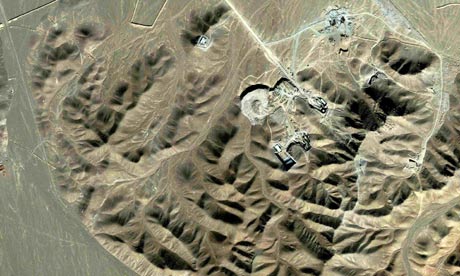
Iran and the IAEA

Holding the theme Iran here is a very new current issue.

The International Atomic Energy Agency, the UN nuclear watchdog, has passed a resolution against Iran. But Iran calls this resolution "illegal"

So i looked at what the IAEA wants or "urges":
1. Iran should cease construction of it's Qom site. (the one it hid)
2. Give information of the Qom site.
3. Ensure the international community that they are not going to/planning to build more sites (just like Qom).
4. Iran should live up to it's agreements/requirements and obligations.

So... Illegal?
Not really.

I'm very interested to see where this might lead, the international community must ensure that Iran is not proliferating nuclear weapons and that they are respecting the authority of the UN. These must be secured, it's really a question of how.

Other factors that may come into play soon are, Israel - they may chose to respond to the threat that Iran is posing (considering it's anti-Israel stance). and the sailors, it may be the case that their arrest is used for political leverage. (it must be noted however, the sailors were arrested on purely legitimate grounds).

Sunday, 29 November 2009

Iran and its Nukes


I'd like to lightly draw an outline of Iran and the future.
and why im a little frightened.

Iran and the Uk/Us have gone back oh so 35ish years - my history sucks.
The current focus is very much on Iran and nuclear energy, it has been for around a decade.

The main states at the UN will not allow Iran to enrich nuclear material because of their fear it could lead to more nukes.
Iran says it wants to use nuclear energy as a more efficient fuel and for research.

You see these two sets of ideas about things cause friction and even tension.

So, the secret facilities in Iran has been brewing an even more serious tension. More so with the UN having to order them shown.

But the whole logical cohesion is crazy:
Why cannot Iran make these nuclear fuels?
Why do they want to?
What do they want the fuel for?
Who is the international community to deny them autonomy?

It's a series of questions for which there is no clear and delineating answer. I'd suggest (and i know little on the subject)

I suspect Iran is both like the child who does the opposite of what he's told, and like the defenceless ant, small, proud, but not without confidence, when considering how they are perceived and how they have been treated by the Bush administration.
(and i'll provide no more references to the Bush administration's actions, just search google.)


They have been marginalised by the international community and nuclear energy certainly represents a milestone. Not to mention their lack of real defence against military superpowers like Russia and the US (in terms of the nukes).

The most reasonable answer i believe is the west: an overbearing parent.
Iran is a state and like most states has a vested interest in it's state. Why the international community denies and sanctions Iran on nukes is immaterial, they are ignoring it, they have interests to further.

(As for why I'm getting bad feelings... )

I do not think it of little relevance to point out the Iranian government's harsh criticism and attacks at the west and Zionism (from the Ayotollah Iran's supreme religous/political leader and from Ahmedinejad Iran's PM)

also the history of Iran & western relations: from when the Iranians took hostage US citizens. the UK/US invasion of middle east and an extremely suspicious and dictatorial re-election of Ahmedinejad...

the re-election was considered rigged. It is interesting to note how candidates for PM secure their candidacy, that they must be accepted by the Grand Ayotollah. As such Iran can be considered a religious government.

The most poignant issue to date, sparking my real fears is Iran's continued dismissal of UN resolutions:
They still can't build nuclear sites. (although we know they have)
THEY ARE PLANNING TEN.


and, as a form of disclaimer let us not forget the rose tinted glasses we have of our own country.

It just seems to me that a lot is and will happen surrounding Iran over the next 4 years, something is up and it is something we should all have at the forefront of our minds. Time is certainly running out.

Friday, 23 October 2009

The Omnipotence Of Capital: Godly Money

Capital is money... Omnipotence is all powerful.
The question is why. Why is money an all powerful substance and what effect does this have?

Money has a "use value" with that we must purchase certain goods, food, water, electricity, , housing and the list goes on. Not only does it have a use value for "goods" but also for services: education, workforce, maintenance, construction. The utility of money therefore is a necessary mechanism for "doing stuff" and social mobility. To clarify this, if you want utility (in anything) you need money.

Recognising the need for money to do anything (mobilize utility) is a fundamental aspect of this argument.

Profit and competition are other concepts that need to be recognised. An individual, a company, a nation - all need to make a profit.
Recognising the "use value" of money spoken above, that profit=more money, more money means more "use value". This is circular, the more "use value" the more one can invest in activities that produce profit.

It is from these key concepts we can spread outwards. Why is capital omnipotent.

The profit motive illustrates a self-interested mechanism of capitalism. Competition also shows itself at the level of the individual, the company, the nation, all are competing at different levels for their gain.

At the level of the individual there is a desire to make profit,

higher wages and lower prices of goods.
Profit is a desire for companies, lower worker wages and higher prices of goods.

It is interesting to note how these two profit motives are at odds with each other, and from here we can understand where Karl Marx was coming from when he suggested the term, exploitative.

Competition acts as a regulating mechanism, several companies means several wages provided therefore individuals choose the highest. Several companies means several products, so individuals choose the lowest. Respective of companies, they must provide higher wages to attract the workers and lower prices of goods to attract consumers. From this point of view free market capitalism makes sense, theoretically.

At the level of the nation, where omnipotence and it's effects really converge: nations politically entertaining their own self interest to compete and grow on an global scale and people doing the same for profit, shapes the contours of the global economy.
Nations want companies to create jobs for people so people get money. This way the nation economy grows , usually at a rate of about 2% a year, (in the uk since the economic crash it is 0.5%) that is on all lending 2% interest is paid. The nation gets more "use value" building more schools, hospitals, roads and can import foreign things.

so now we have a global economy, competition and cooperation between countries for investment (this has the effect of enlarging companies and creating jobs and profit thus growth), jobs (money for individuals & growth) and companies (these equal: profit, growth, investment and jobs) .
If these are economically inaccurate, i apologise. I'm trying to paint the picture where we both understand that people, companies and nations need money and that concerning the idea of a global economy, nations need companies for their jobs and their growth.

The implications of this can be devastating

The state of affairs exist now where nations need companies in their country. They want them for the profit, they want them so their people have jobs, they want them to keep unemployment down, they want them because the greater the nations profit, jobs and employment the better the gov't look.
Many companies are so large they are not hindered by a country, they are so rich they can just leave, these are transnational corporations.
Let me just illustrate my point by analogy- a country thinks they need to protect their workers and their environment, this means (for instance) the minimal wage and waste dumping restrictions. A corporation will just leave for another country with minimum regulations. That's fine right? nooo. As i said, gov't NEED companies. So why would they pursue such policies!?
Corporations can play one gov't off with another for the smallest regulation and greater subsidiaries (welfare benefits for companies) .

E.g. A company will look at a governements plans and say "Your planning on using an environmental tax cap" (taxing companies if they go over a certain amount of emissions) or "using waste dumping restrictions " (implying the company will need to pay to remove waste they make)

They will frown at the countries government and give a sideays glance at some third world countries or some low regulation countries - teasing to go and invest over there...

So what can the governemnt do!? Stick to their guns and use those enviro policies? that'll look great won't it... at the end of their term looking for re-election and standing by a chart that shows greater unemployment and very little economic growth.... (i thinks that's called political suicide)
Well, they either don't pursue those policies or give tax cuts to the corp and be like " come over here, we'll give you money to help you dispose of all that pesky waste!"

I hope this expresses how the political and the economic are so tied up.

As a general problem, exercised by the nature of the material and profit and wealth.
Money transcends ethics.
I vital aspect of it's omnipotence is the limited restriction it has ethically. Money does not chose right and wrong, it chooses profit and loss.
On the occasion that it appears that money has become ethical, whether this is better allocation of resources or services the move is likely to be generated or permeated politically.

In many ways the ground we are fighting on has already been taken. It is much easier to criticise the capitalist system from "outside of the box". When i say this, i want the people following me this far to understand that the "box" is the social world (our identity, practises, understandings, frames of reference and basic ideologies) articulated by capitalism. In many ways, the fight is already over.
A response to the question, "why in a world controlled by money, do we accept that." really a question, why in a world unequal, racked by poverty and exploitation do we accept it's mechanism.... Really... Do we even question it. Is the above common knowledge?
No.

It isn't as though a country can just "not work this way". Money is use value, and that is an almost universal. If these countries have no money then they can't do anything. This does not then follow, as i'm sure few will point out: that money mechanics are therefore right.. Surely the problem is money itself.

There are many people poor on this planet. This means they do not have access to food, water, shelter, warmth - even, god forbid- the internet!
The driver of this problem, namely being poor is defined in itself- no money.

But what can money get us?
Consent?
Do all your friends get into a frothing mouthed frenzy when they hear of money... no..
Do you teachers?
Parents?
The news?
Tv programmes?
Magazines?
advertisments?

no.. i don't think so.

There isn't really that great horde of dissenting voices...
This isn't exactly a simple subject.

Money is not bad of itself, in wanting all forms of things i'm sure it's a great method of reward, a check on efficiency, a method of allocation.
The problem, as i've been trying to articulate, is the current money mechanic.
Money defines and therefore limits: action and use. It holds us back.


Cheers.

Sunday, 6 September 2009

Relativism and a slow changing world

We live in systems. Not those naturally occurring, evolution, ecosystems, laws of physics, chemistry etc. We live within those we create around us, an infrastructure of schools, hospitals; social systems, our norms and values, our friends and our beliefs (be that generally or religiously) economic systems, political systems. Hierarchy.

The point I'd like to pose is that we as humans we are prone to conservatism - that is - our systems take a long time to radically change. This occurs in an era of radical individualism and thus inevitably relativism.

The absence of any radical change is implicitly bad. Our systems have not occurred because of systematic rigorous testing to achieve any optimal degree of perfection, but have been developed slowly overtime. As you will realise by the end of this - all social change is slow.
The other reason why this lack of radical change is bad lies in the point earlier of relativism, largely from individualism. We all have different beliefs and values, not all of these are in line with the current systems. However this is balanced by the idea that the system we live within shapes our culture, and so beliefs and values.

This essay insofar has suggested that people all have different experiences, values and beliefs. It has been implied that the systems we live in shape that individualism, thus our values - "culture" may apply here. As these are self reinforcing then radical change is going to be severely hampered. Moreover, the plurality of people, with their own beliefs people will find dislikes in a system or have preferential systems with which they regard as better, or they believe in more.

Support and reinforcement from what i am saying comes from the CIA library.


Chapter 2 looks to psychology for how our perceptions are established and sustained.

A quote from here says:
"Mind-sets tend to be quick to form but resistant to change."

This establishes the idea that once we form our beliefs, they are difficult to change.


Any change economically, socially and politically will be slow.

Change would largely be catered by these conditions:

(a) Not only must people recognise what is wrong with a system to correct it, but they must be willing to change it.

This point has problems, 1.many people are not able to clearly "see" or understand a system. 2.They are not able to create points that would improve it. 3.As they live within that system it is likely their willingness for change is small.

(b)As these three systems are plurality systems (by that i mean, they are systems that an enormously large amount of people use) so (a) must occur within more than one person. There must be enough people to bring about that change.

(c)They must have some form of similarity, agreement or recognition of problems. This is hindered by 2. and 3.

(a)and (b) and (c)are not likely to occur.

However this does not have to be the case.
If (a) occurs then (b) follows. I (a) and (b) it is likely (c) follows.

Knowing this, how do we incur radical change?
Before we begin... It might be prudent to say that generating change is as difficult as suggested above. More so when your trying to change the speed that things change.

The answer comes from looking at our formula. If we modify (a) and it's associated problems then (b) and (c) are more likely to follow.

The fastest way for (a) to change the economic and political world would be over the internet. On tap knowledge and views. Lighting fast technology and coordination.

Socially this is already achieved, the concept of memes largely transfers the idea of an evolutionary model into culture and what makes up the culture. Google it, it is a fascinating social science.

Politically there are more problems to address. Mostly, the western system is a representative democracy with a narrow remit taken over by an agenda which is often dominated by the prime minister (in the uk) or the president (as of the us) and large lobbying groups or interest groups. It is certainly the case in the UK and US that those political parties who gain power are unlikely to change it to a system where they lose it.
The biggest problem of radical political change aside from the above are the voters. Their inability to boycott the system or vote for parties that wish to cater change. Moreover (b) applies here especially in the context of 3.

In short, the current layout of those two systems does not favour change.

for the political system to embrace change a higher level of political awareness is needed from the public. And votes need to be proportional towards the power of parties. (however this should be approached with caution because of 1, and 3.) and parties need to be much more transparent with their objectives.
Either this form of proportional democracy allows for greater change or...
a direct democracy. The most powerful medium for expressing political views, choosing difficult decisions, building policy etc. is the internet. Unhampered open sourced policy created for and by the public on an easy and factually correct format.
Direct democracy can be realised through the internet.


lastly concerning the economic system.

A larger awareness is need of the economic system for (a) to ever happen.
As this system affects every one's life it must change within the political system t be legitimate. The economic systems must change due to informed representative decision making.
Again, this is limited by 1. and 3.

so in conclusion. ...and as im getting restless as usual..

The internet should be embraced for (a) to occur.